Logan Weber · 5 September 2026
How Response Code Patterns Influence Post Migration Search Performance Metrics
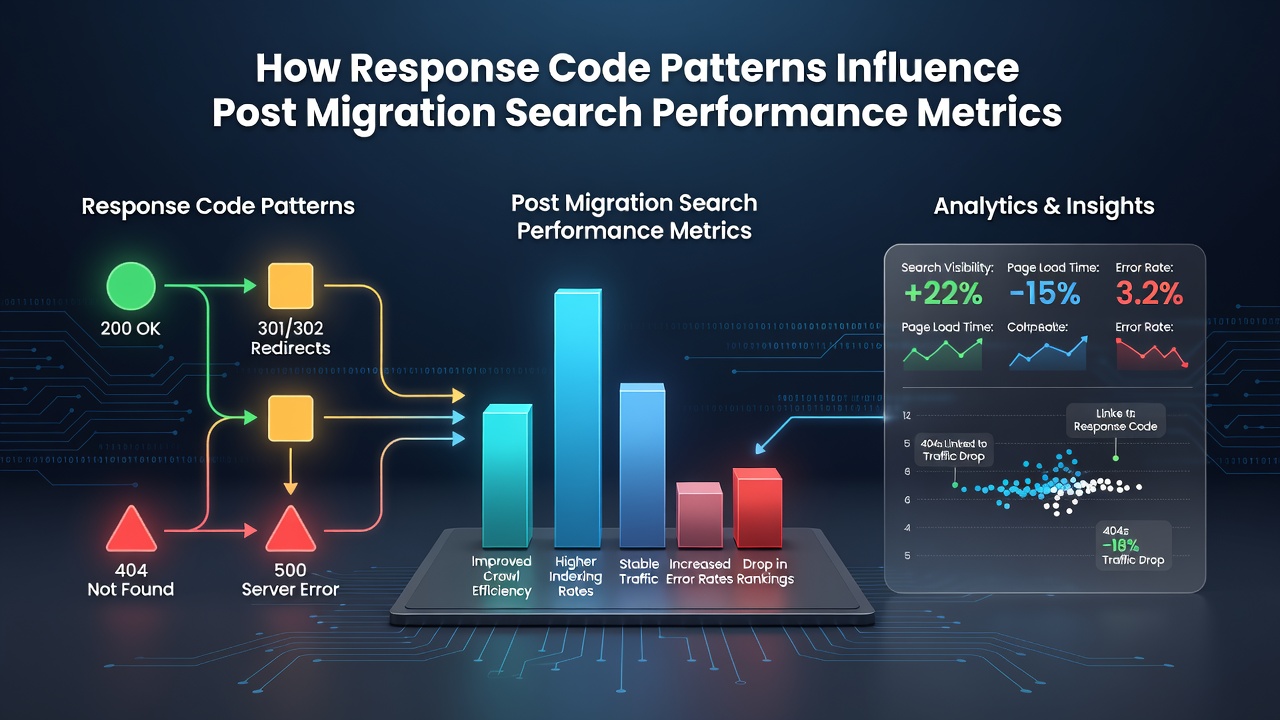
Website migrations often trigger shifts in how servers communicate status through HTTP response codes, and these patterns directly shape crawl efficiency, indexing speed, and ranking signals afterward. Researchers tracking large-scale site moves have documented consistent correlations between redirect chains, error code spikes, and drops in organic visibility that persist for weeks or months. Data from multiple industry audits reveal that sites implementing clean 301 redirects maintain higher crawl rates compared to those accumulating temporary redirects or soft 404s.
Core Response Codes in Migration Scenarios
HTTP status codes serve as the primary signals search engines use to interpret page availability after a domain or structural change. Permanent redirects coded as 301 instruct crawlers to update their indexes and transfer link equity, whereas 302 temporary redirects keep the original URL in rotation and dilute that equity over time. Observers note that 404 responses on previously indexed pages accelerate de-indexing, while 410 codes signal permanent removal and often produce faster clearance from search results. Studies conducted by academic teams at institutions across North America and Europe indicate that chains exceeding three redirects correlate with measurable declines in crawl frequency, as bots allocate budget more conservatively when encountering repeated hops.
Patterns Observed After Large-Scale Moves
Post-migration logs frequently display clusters of 5xx server errors during initial crawl waves, and these bursts coincide with temporary losses in indexed pages that can reach 15 to 30 percent according to aggregated reports. Sites that resolve these errors within the first 48 hours recover indexing volume more rapidly than those leaving them unaddressed for extended periods. Redirect loops, where one 301 points back to another, create dead ends that prevent deeper crawling and leave secondary pages undiscovered. Figures from infrastructure monitoring platforms show that proper canonical tags paired with 301s reduce duplicate content flags by significant margins, preserving performance metrics that would otherwise suffer from thin content signals.
Effects on Key Search Metrics
Crawl budget allocation changes noticeably when response code distributions shift. High volumes of 404s consume resources without yielding new indexable content, while clean 200 responses on migrated URLs accelerate re-crawling of priority sections. Ranking fluctuations often trace back to these patterns, because search algorithms treat inconsistent signals as indicators of site instability. In September 2026, updates to core crawling systems emphasized faster processing of permanent redirects, leading several enterprise migrations to report improved recovery timelines compared with prior years. Click-through rates and impression volumes follow indexing recovery, yet prolonged exposure to error codes delays the return of these metrics to baseline levels.
Monitoring and Adjustment Practices
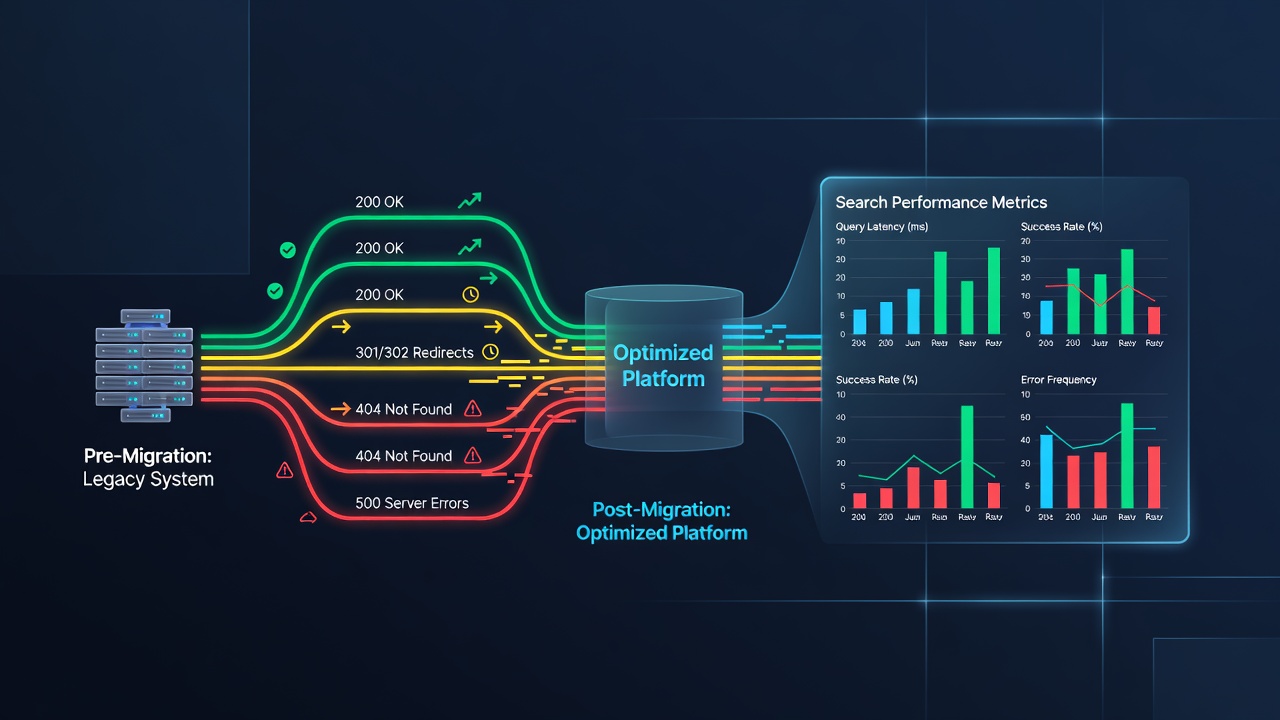
Log file analysis combined with server header inspection allows teams to map response code distributions across thousands of URLs within days of launch. Tools that aggregate these patterns highlight redirect chains and soft errors that manual checks might miss. One documented case involved a retail domain that migrated product categories and initially saw a 22 percent rise in 302 responses, which search console data linked to a 12 percent decline in average position for affected terms. After converting those redirects to 301s and eliminating duplicate parameter handling, the same domain regained lost positions within four weeks. Another enterprise project tracked 410 responses on seasonal content and observed quicker de-indexing that freed crawl budget for active product pages, producing measurable gains in index coverage for high-value sections.
Regional Data Sources and Broader Context
Reports compiled by the Google developer documentation outline recommended handling of permanent redirects during structural changes. Complementary research from Australian academic groups examining large government portal migrations has shown similar relationships between error code frequency and indexing latency. These findings align with observations from Canadian digital infrastructure studies that emphasize consistent header responses as a factor in sustained search visibility after domain transitions.
Conclusion
Response code patterns established during migration continue to influence search performance long after the initial switch. Clean permanent redirects, prompt error resolution, and avoidance of redirect chains support faster re-indexing and more stable metric recovery. Organizations that monitor these signals through server logs and search console data maintain clearer visibility into how each code category affects crawl behavior and ranking outcomes across their migrated properties.