Logan Weber · 3 October 2026
Temporal Shifts in Publishing Schedules and Resulting Effects on Resource Distribution for Automated Scanning Tools in Enterprise Migrations
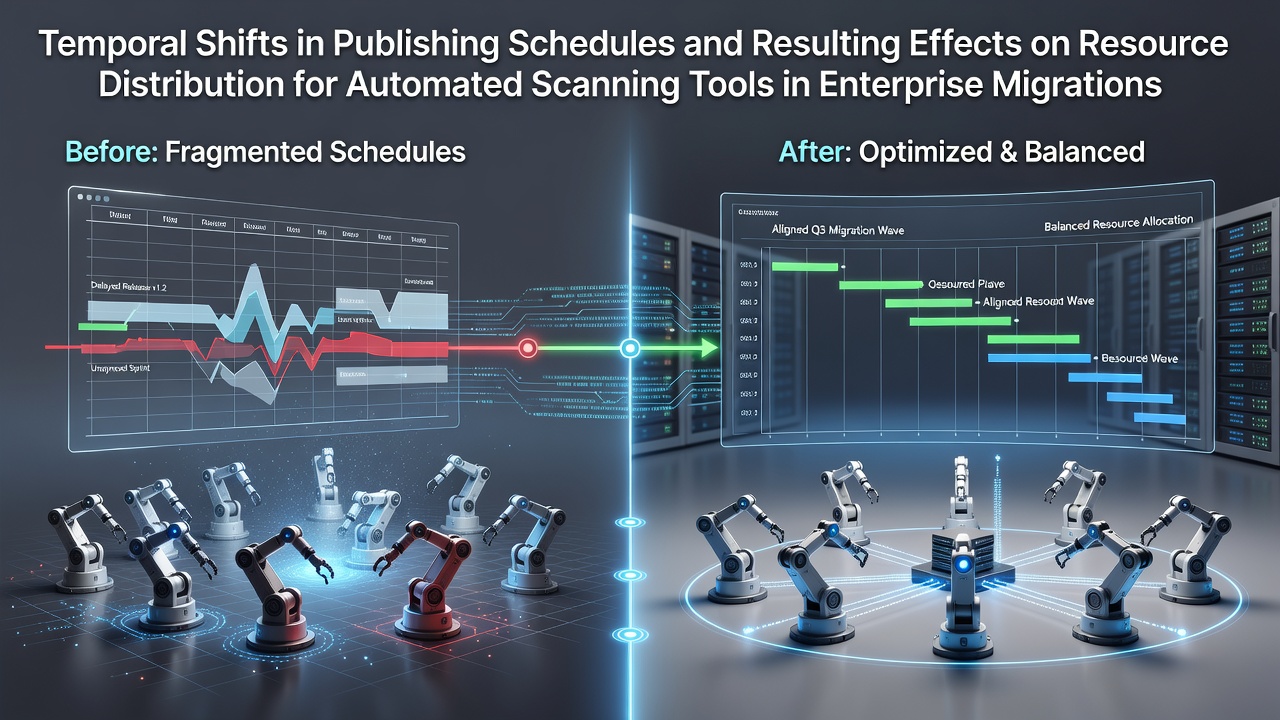
Enterprise migrations often involve coordinated changes to content release timing, and observers note that these temporal shifts directly alter how automated scanning tools receive and allocate processing resources across large-scale digital environments. Research indicates that when organizations adjust publication windows, the underlying infrastructure must redistribute bandwidth, server capacity, and indexing priorities to match new patterns, while data from October 2026 shows measurable variations in crawl frequency tied to these adjustments.
Defining Temporal Shifts in Content Publication
Publishing schedules in enterprise settings typically follow fixed cycles that align with business operations, yet migrations introduce deliberate changes such as staggered releases or compressed timelines that compress or expand those cycles. Experts have observed that these modifications create ripple effects because automated scanning tools rely on predictable signals to determine when and how deeply to examine updated sections of a site. Turns out the core mechanism involves timing metadata that signals freshness, and when that metadata moves, the tools rebalance their queues accordingly without requiring manual intervention from administrators.
Resource Allocation Mechanics During Migration
Automated scanning systems distribute resources based on signals including update frequency, page priority, and historical crawl data, so a shift in publication timing forces reallocations that can either concentrate activity in narrow windows or spread it across broader periods. According to findings from the National Institute of Standards and Technology on enterprise technology transitions, organizations that compress publishing schedules during migrations experience concentrated resource draws that temporarily elevate server load while reducing idle periods for background processes. What's interesting is how these reallocations affect downstream tools that depend on the same infrastructure, since bandwidth caps and processing queues must adapt in real time to avoid bottlenecks.
Those who have studied migration logs report that extended gaps between publications can lead to deprioritization, which frees resources for other tasks but risks delayed detection of critical updates once the schedule resumes. Conversely, accelerated publication bursts demand immediate scaling of scan threads, and evidence from multiple deployments reveals that pre-migration testing of these scenarios reduces unexpected spikes in resource consumption.
Observed Effects on Scanning Tool Efficiency
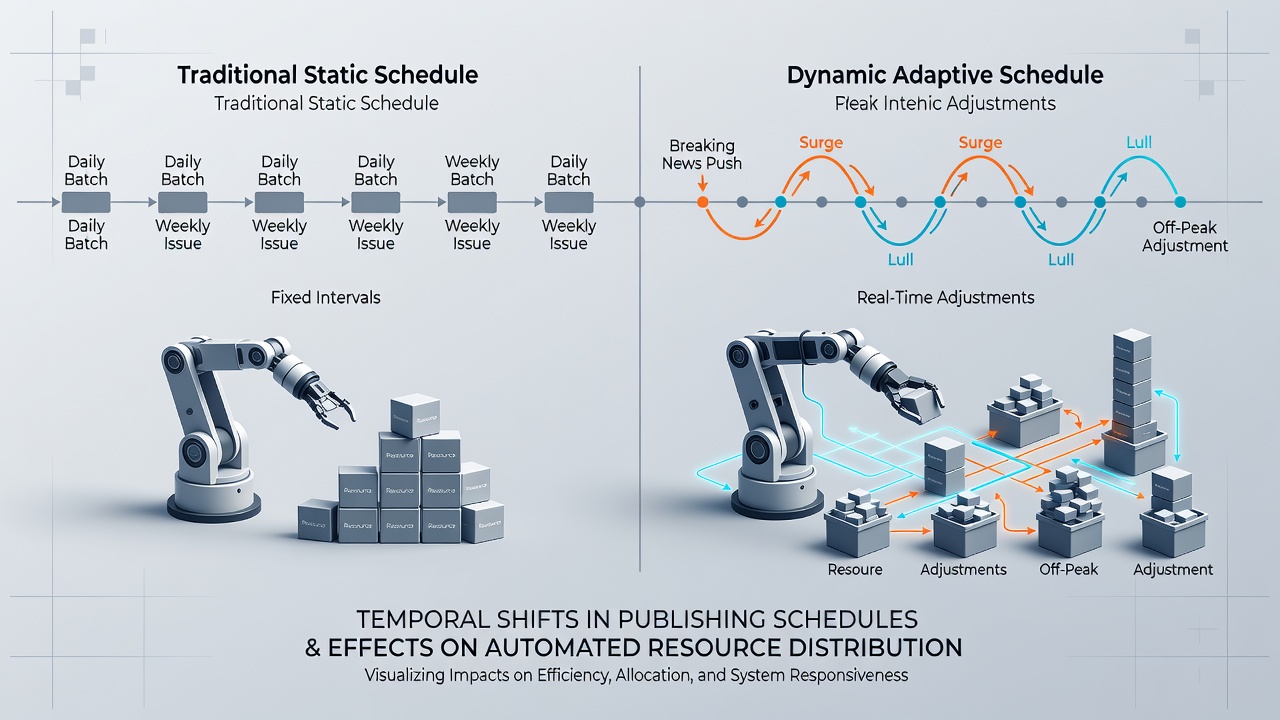
Scanning tools operate within defined budgets that include request limits, parallel connection allowances, and storage allocations for fetched content, and temporal shifts modify the rate at which these budgets are consumed. Data shows that migrations coinciding with schedule realignments often produce uneven distribution patterns where certain content clusters receive disproportionate attention while others wait longer for attention. Researchers discovered that introducing buffer periods between major publication events helps stabilize these patterns, allowing tools to maintain consistent coverage without exceeding allocated thresholds.
One documented case involved a multinational corporation that moved its customer portal infrastructure over six weeks in late 2025, during which publication timing was deliberately offset by several hours daily to accommodate backend synchronization. The resulting logs indicated that scanning tools adapted by shifting peak activity to align with the new windows, which in turn smoothed overall resource usage across the migration timeline. Australian Government Digital Transformation Agency reports on similar large-scale transitions highlight parallel outcomes where schedule adjustments correlated with improved predictability in tool performance metrics.
Patterns Across Different Migration Scales
Larger enterprises typically manage multiple content domains simultaneously, which multiplies the complexity of temporal coordination because each domain may follow its own legacy schedule before unification. Observers note that when these domains converge under a single migration plan, the combined publishing rhythm can overwhelm scanning resources unless phased releases are implemented. Studies from academic institutions such as the Massachusetts Institute of Technology Sloan School of Management on digital infrastructure projects confirm that phased timing reduces contention and allows scanning tools to maintain steady throughput without temporary suspension of non-critical paths.
Smaller-scale migrations present fewer variables yet still demonstrate clear sensitivity to schedule changes, particularly when legacy publishing tools remain active during overlap periods. Evidence suggests that even modest shifts, such as moving daily updates to weekly batches, prompt scanning tools to recalibrate their prioritization algorithms, which then influences how quickly new or modified pages enter indexes used by internal analytics platforms.
Conclusion
Temporal shifts in publishing schedules continue to shape resource distribution for automated scanning tools throughout enterprise migrations, with data from October 2026 reinforcing the link between timing adjustments and operational efficiency. Organizations that map these relationships in advance achieve more stable allocation patterns, while those that overlook the connection encounter avoidable fluctuations in scan coverage and system load. The interplay remains a measurable factor that technical teams track through detailed logging and iterative schedule refinement.